

Ever notice how some meals leave you hungry an hour later, while others keep you satisfied for hours? The secret isn’t eating more food — it’s designing your plate the right way. When you balance nutrients, textures, and portion sizes smartly, you can enjoy a diet meal that feels generous and filling without extra calories.
The good news? You don’t need complicated recipes or expensive ingredients. A simple plate strategy can completely change how satisfied you feel after eating.
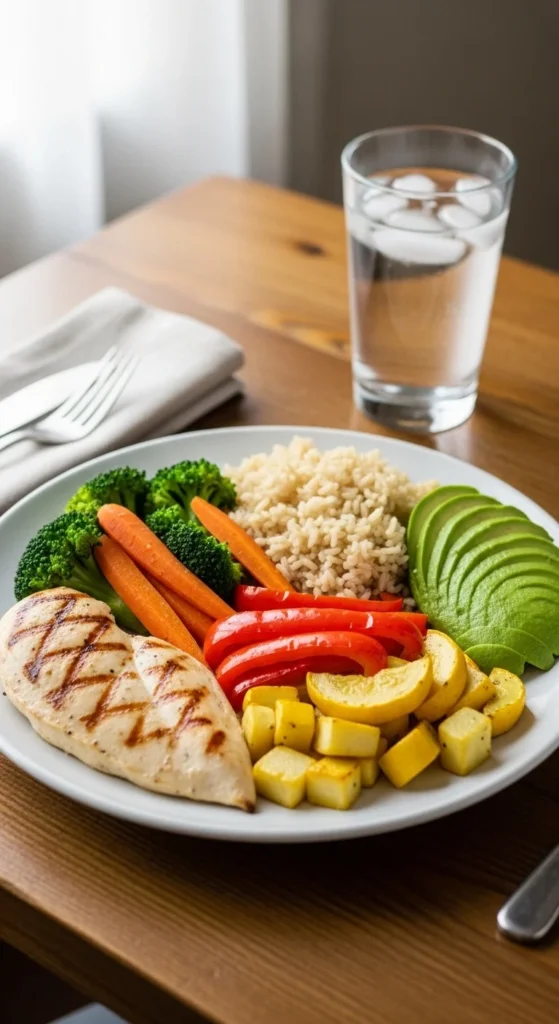
Let’s break down exactly how to build a diet plate that keeps you full, energized, and happy.
Start With Protein as the Foundation
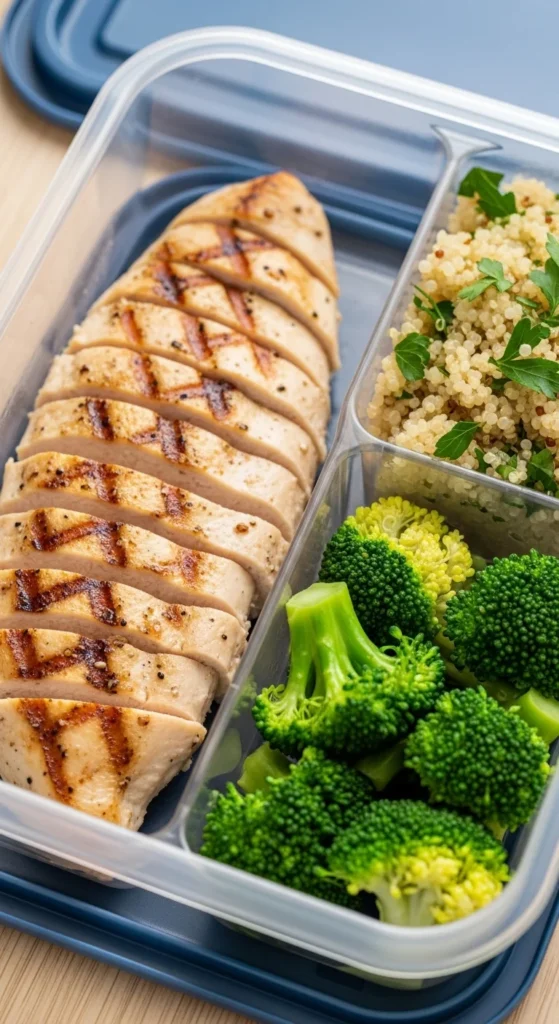
Protein is the most important part of a filling diet plate. It helps control hunger hormones and keeps you satisfied longer than carbs alone. When you eat enough protein, cravings usually drop naturally.
Good protein options include:
- Grilled chicken or turkey
- Eggs or egg whites
- Fish like salmon or tuna
- Greek yogurt or cottage cheese
- Lentils, beans, or chickpeas
- Tofu or paneer
A simple rule: Protein should take up about one-quarter of your plate.
If you struggle with hunger between meals, increasing protein is often the fastest fix.
Fill Half Your Plate With High-Volume Vegetables
Vegetables are your secret weapon for fullness. They add bulk to meals without many calories. This creates the feeling of a large portion, which helps your brain register satisfaction.
Focus on:
- Leafy greens (spinach, lettuce, arugula)
- Broccoli and cauliflower
- Zucchini and cucumber
- Bell peppers
- Green beans
- Mushrooms
You can roast, steam, sauté, or eat them raw. Adding herbs and spices makes vegetables more enjoyable without adding calories.
Aim for half your plate to be vegetables whenever possible.
Add Smart Carbs for Energy (Not Overeating)
Carbohydrates are not the enemy. The key is choosing slow-digesting carbs that keep blood sugar stable.
Better carb choices:
- Brown rice
- Quinoa
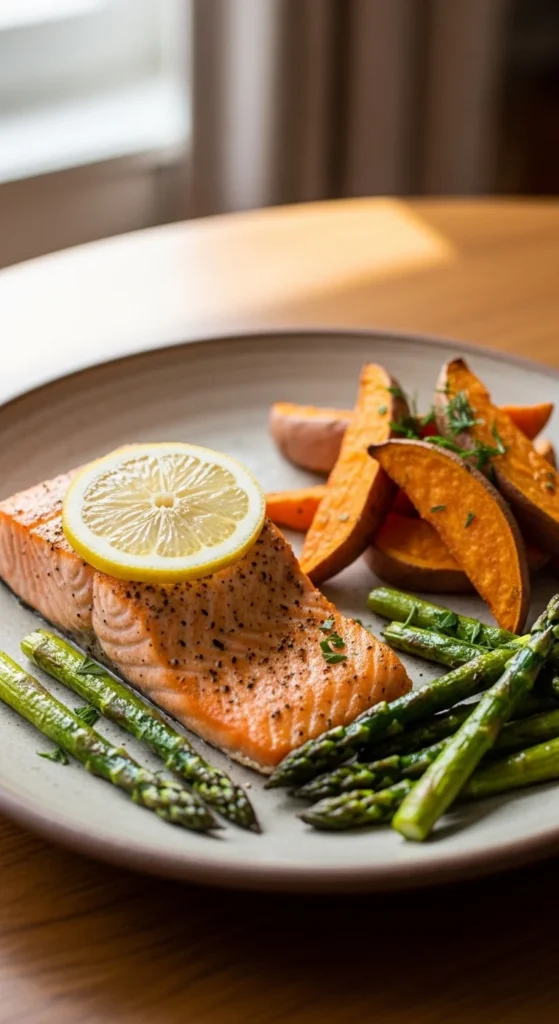
- Sweet potatoes
- Whole-grain bread
- Oats
- Beans and lentils
Portion tip: One-quarter of your plate should contain carbs.
This balance gives energy without causing rapid hunger later.
Don’t Forget Healthy Fats for Satisfaction
Fat adds flavor and slows digestion, which increases fullness. Without fat, meals often feel incomplete.
Healthy fat ideas:
- Avocado slices
- Olive oil drizzle
- Nuts or seeds
- Nut butter
- Cheese in small amounts
You don’t need much. Even one tablespoon can make a big difference in satisfaction.
A small amount of fat can transform a boring diet meal into something enjoyable.
Use the “Volume + Density” Trick
One powerful strategy is combining low-calorie volume foods with nutrient-dense foods.
Examples:
- Big salad + grilled protein
- Stir-fried vegetables + rice + tofu
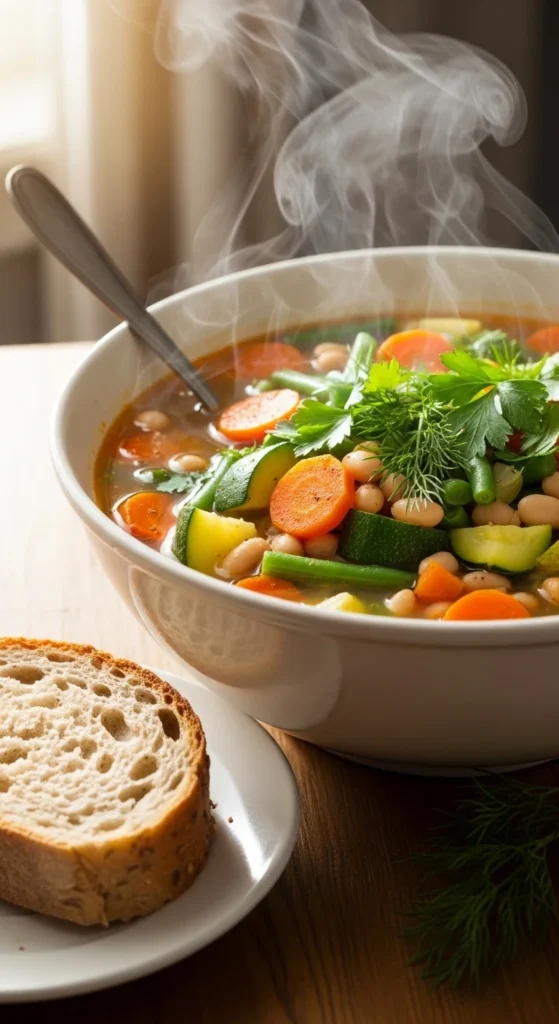
- Soup + lean meat + whole grains
This mix gives both fullness and nutrition.
Think: large portion size without large calories.
Eat With Texture and Variety
Your brain loves variety. Different textures make meals feel more satisfying.
Try combining:
- Crunchy (cabbage, nuts)
- Creamy (avocado, yogurt sauce)
- Soft (grains, beans)
- Juicy (tomatoes, fruit)
Even simple meals feel more exciting with texture contrast.
Example: Rice + chicken + crunchy salad + yogurt sauce.
Slow Down and Eat Mindfully
Even the perfect plate won’t feel filling if you eat too fast. It takes about 20 minutes for your brain to recognize fullness.
Simple habits:
- Put your fork down between bites
- Drink water during meals
- Chew thoroughly
- Avoid screens while eating
These small changes can reduce overeating without changing food quantity.
Hydration Matters More Than You Think
Sometimes hunger is actually thirst. Drinking water before and during meals can increase fullness naturally.
Try:
- A glass of water 10 minutes before eating
- Herbal tea with meals
- Sparkling water for variety
Hydration supports digestion and appetite control.
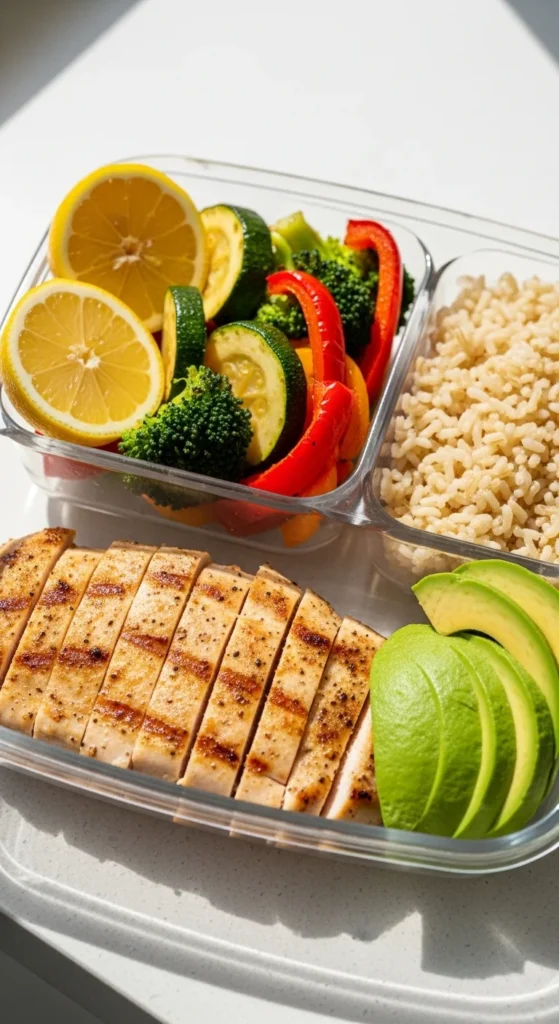
Example of a Filling Diet Plate
Here’s a simple balanced plate idea:
- Grilled chicken breast
- Roasted broccoli and carrots
- Half cup brown rice
- Avocado slices
- Olive oil drizzle
- Lemon water
This combination includes protein, fiber, healthy fat, and complex carbs — the perfect fullness formula.
Common Mistakes That Cause Hunger
Avoid these mistakes:
- Eating only carbs (like pasta alone)
- Skipping protein
- Not eating enough vegetables
- Avoiding fats completely
- Eating too quickly
- Drinking sugary beverages
Small adjustments can dramatically improve satisfaction.
Final Thoughts: Fullness Is About Balance, Not Restriction
Diet meals don’t have to feel small or unsatisfying. When you design your plate with protein, vegetables, smart carbs, and healthy fats, you create meals that feel abundant and enjoyable.
The goal isn’t eating less food — it’s eating smarter combinations.
Start with one balanced plate today and notice how your hunger changes.
Save this guide for later and use it when planning your next meal!
Leave a Reply