

Feeding a 1-year-old can feel like a balancing act. You want to ensure they’re getting the right nutrients while also keeping things simple and delicious. At this stage, toddlers are transitioning from baby food to more solid meals, and it can be tricky to figure out how to serve a balanced plate that they’ll actually enjoy.
In this article, we’ll guide you through a simple portion formula that will help you create balanced meals for your little one, packed with all the nutrients they need to grow and thrive. Plus, we’ll include some practical tips to make mealtime fun and easy!
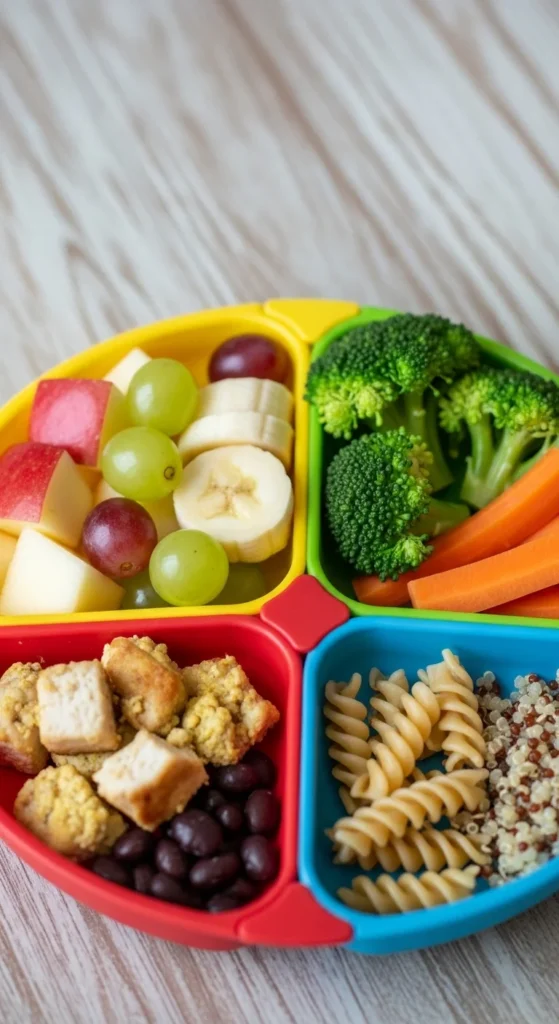
Understanding the 1-Year-Old Plate
At 1 year old, your child needs a variety of foods from different food groups to support their rapid growth and development. These food groups include:
- Fruits and Vegetables – Packed with vitamins, minerals, and fiber.
- Protein – Essential for muscle development and overall growth.
- Grains – Provide energy and essential nutrients.
- Dairy – Offers calcium for strong bones and teeth.
The goal is to offer a mix of these food groups in appropriate portions that suit your toddler’s smaller stomach while also making sure each bite counts nutritionally.
Portion Formula: 1/4 Plate Protein, 1/4 Plate Grains, 1/2 Plate Fruits & Veggies
Here’s the simple formula to build a balanced plate for a 1-year-old:
- 1/4 Protein: This can come from sources like chicken, tofu, beans, or scrambled eggs. Protein is vital for their growth, helping develop muscles and tissues.
- 1/4 Grains: Think whole grains like oats, brown rice, or whole wheat bread. Grains give your little one the energy they need to stay active and engaged.
- 1/2 Fruits and Vegetables: Fill half of the plate with a colorful variety of fruits and vegetables, such as mashed avocado, carrots, peas, or slices of banana. These foods are full of the vitamins and minerals that keep their immune system strong.
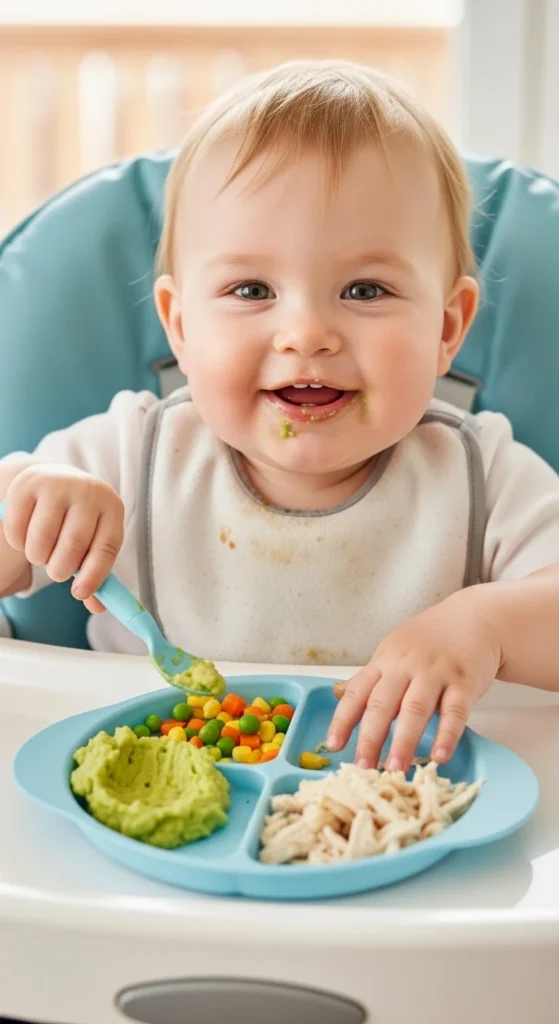
Tips for Creating a Balanced Meal
While the portion formula is a great guideline, there are a few tips that can help you create meals that are both nutritious and toddler-friendly:
1. Make it Bite-Sized and Easy to Chew
At this stage, your little one is still learning how to chew and swallow different textures. It’s important to cut foods into small, manageable pieces that won’t pose a choking hazard. Soft, cooked vegetables and fruits are perfect for this!
2. Use Variety to Keep Things Interesting
Toddlers are notorious for having fickle appetites, so don’t be afraid to mix things up. Offer a variety of colors and textures to keep your child interested in their food. Try offering a different vegetable or fruit each day and rotate protein sources to prevent boredom.
3. Include Healthy Fats
Healthy fats are essential for brain development. Add small portions of healthy fats to their meals, such as mashed avocado, nut butters (if no allergy risk), or olive oil drizzled over vegetables.
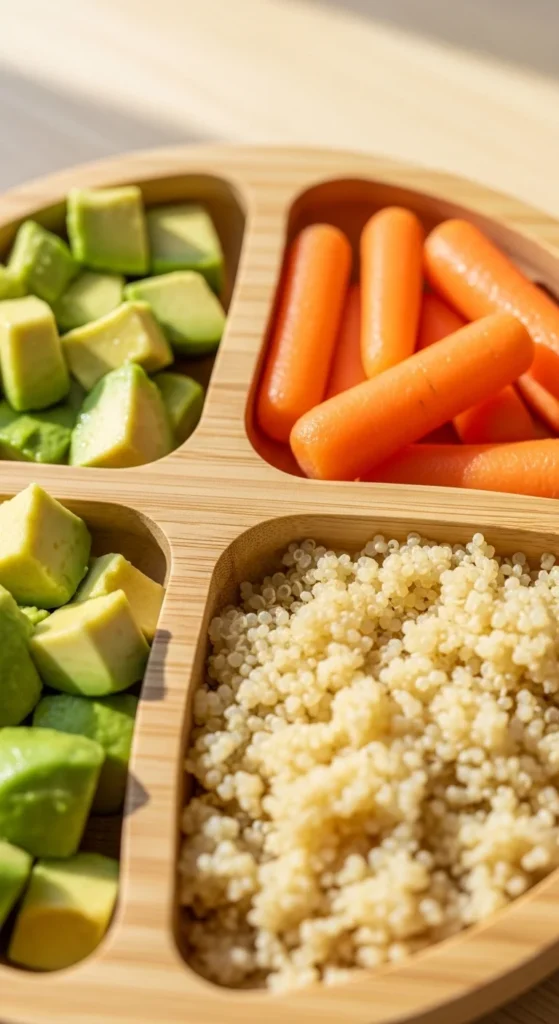
4. Introduce New Flavors Gradually
At this stage, your child is still discovering new flavors. Introduce new foods one at a time, watching for any signs of allergies. Be patient – it may take a few tries for your toddler to develop a taste for something new.
5. Let Them Explore
Toddlers love to play with their food. While you might want to keep things neat, allowing your little one to explore food with their hands is actually great for their development. It helps with motor skills, self-feeding, and understanding food textures.
Sample Meal Ideas for Your 1-Year-Old
Here are a few simple, balanced meal ideas you can try for your toddler:
Breakfast
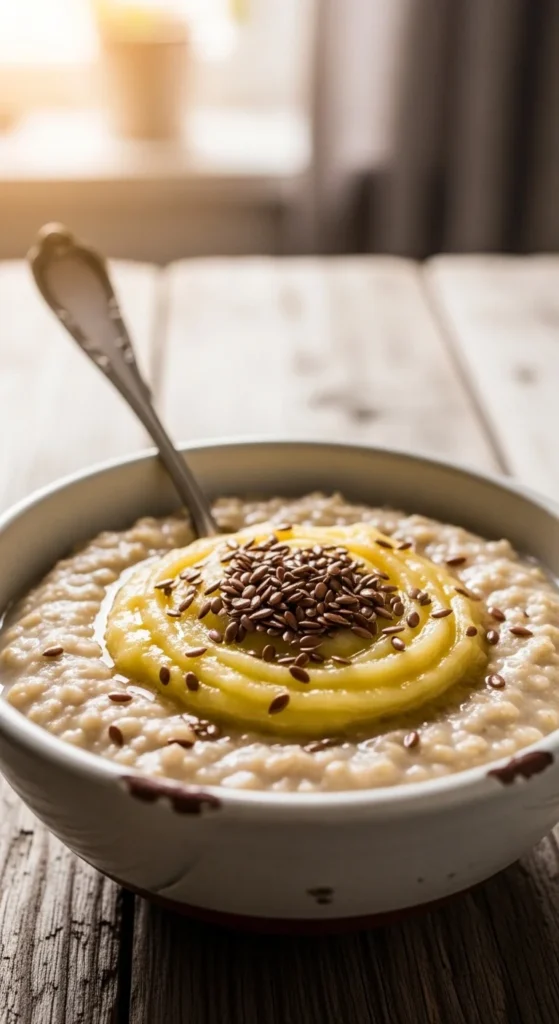
- Oatmeal with mashed banana and a sprinkle of ground flaxseeds
- Scrambled eggs with spinach and cheese
- Whole grain toast with mashed avocado
Lunch
- Whole wheat pita stuffed with hummus, cucumber, and shredded chicken
- Soft-cooked sweet potato cubes with peas and a side of yogurt
- Quinoa with diced tomatoes, avocado, and a small portion of grilled chicken
Dinner
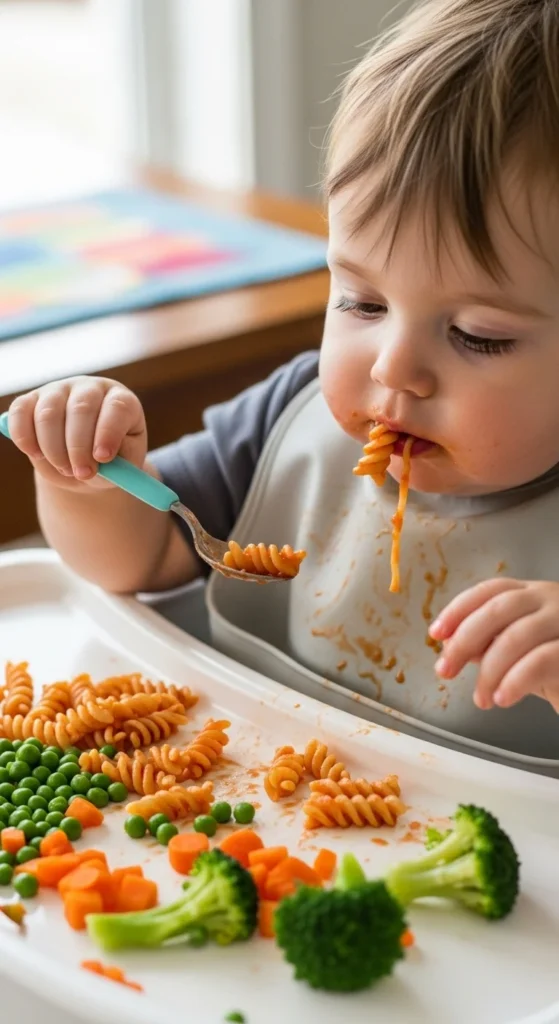
- Soft-cooked pasta with a mild tomato sauce and small chunks of vegetables
- Grilled fish with steamed broccoli and brown rice
- Mini turkey meatballs with a side of mixed veggies and quinoa
Snack Ideas
- Sliced fruit with cheese cubes
- Whole grain crackers with a little peanut butter
- Small muffins made with oats and apple slices
Making Mealtime Enjoyable
It’s important that mealtimes are a positive experience. Here are some quick tips to make sure your toddler enjoys their meals:
- Stay calm and patient: Your toddler may refuse food or get distracted. Keep calm and offer the food again later. Don’t pressure them to eat; this can create negative associations with mealtime.
- Use fun plates and utensils: A colorful plate with their favorite character or a fun-shaped spoon can make eating more exciting!
- Eat together: Children learn by observing, so try to eat together as a family when possible. This encourages your child to imitate and enjoy healthy eating habits.
Final Thoughts
Creating a balanced plate for your 1-year-old doesn’t have to be complicated. Stick to the simple formula of 1/4 protein, 1/4 grains, and 1/2 fruits and veggies. Keep it fun, colorful, and nutritious, and you’ll be setting your toddler up for healthy eating habits that last a lifetime.
Save this guide for later and feel free to get creative with your meals! Your little one’s plate can be as delicious as it is nutritious.
Leave a Reply