

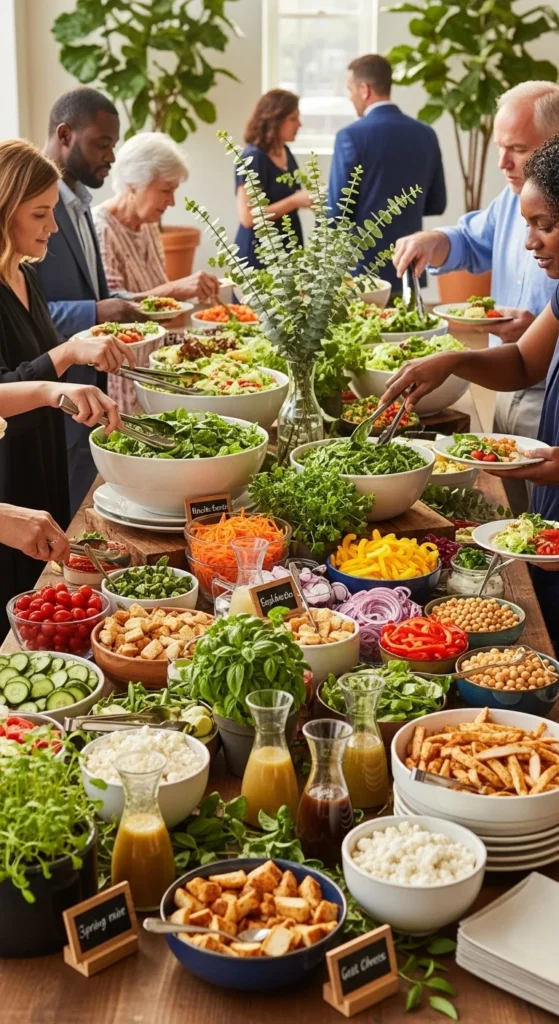
Hosting guests doesn’t always mean spending hours over a hot stove. A beautifully arranged salad bar can be just as impressive — and often more memorable — than a heavy, traditional meal. The secret? Variety, color, and thoughtful combinations that make guests feel excited to build their own perfect plate.
A well-designed salad bar feels relaxed yet abundant. It invites conversation, encourages creativity, and ensures everyone finds something they love — from light eaters to hungry food lovers.
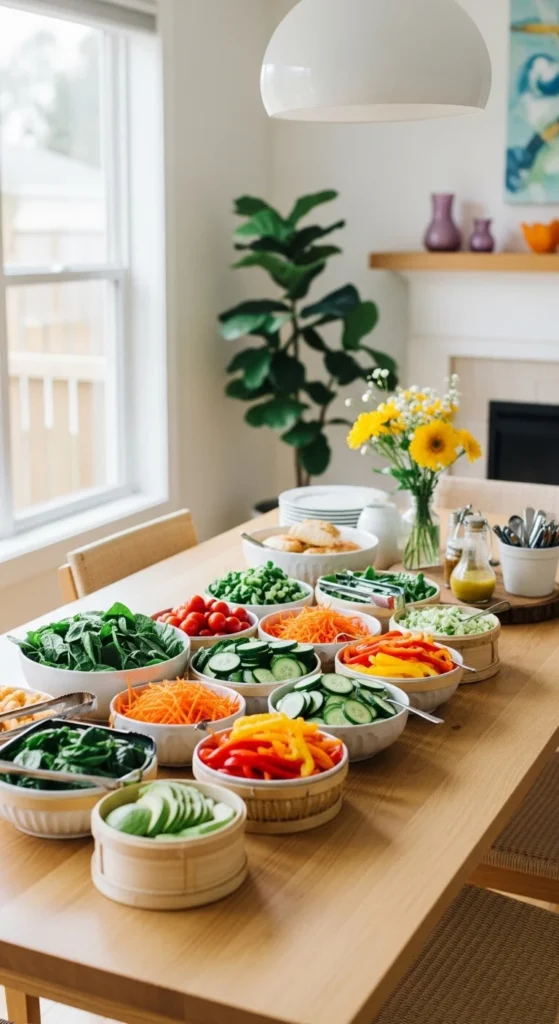
Let’s walk through how to create a salad bar that looks fresh, tastes satisfying, and leaves your guests genuinely full.
Start With a Smart Layout
Before choosing ingredients, think about flow. A good salad bar should be easy to navigate so guests naturally build balanced plates.
Arrange items in this order:
- Plates and bowls first
- Greens and base ingredients
- Proteins and grains
- Vegetables and toppings
- Dressings and garnishes last
This setup prevents crowding and keeps things organized.
Hosting tip: Use different heights — cake stands, wooden boards, or stacked books under tablecloths — to create a visually interesting display.
Choose Fresh and Flavorful Bases
The base is where your salad bar begins. Offering more than one option makes guests feel they have real choices.
Great base ideas include:
- Crisp romaine or iceberg lettuce
- Baby spinach or mixed greens
- Arugula for a peppery flavor
- Cooked quinoa or couscous
- Pasta salad or cold noodles
- Brown rice or roasted potatoes
Mixing leafy greens with hearty grains ensures the meal feels filling, not just light.
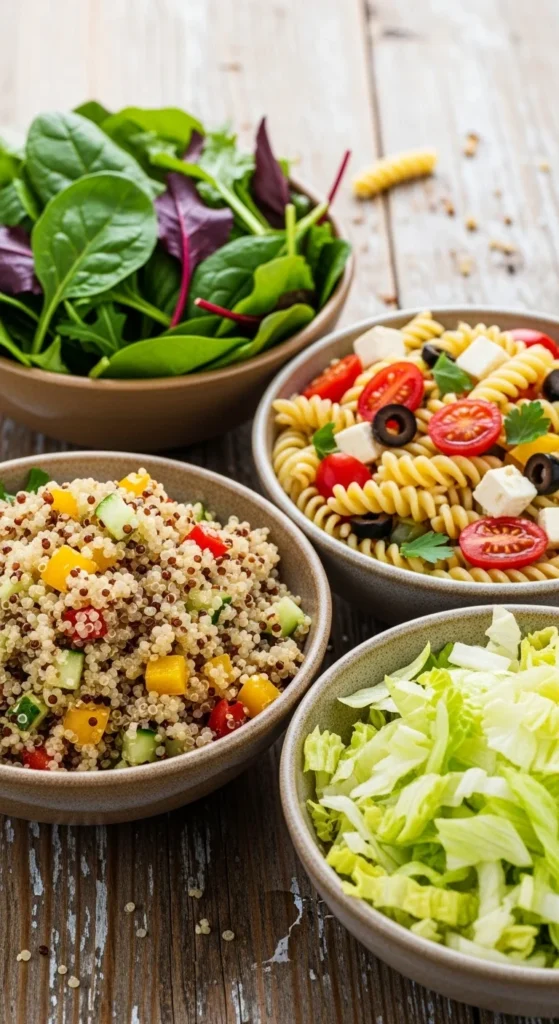
Pro tip: Prep greens ahead of time and keep them chilled until serving for maximum freshness.
Add Proteins That Keep Guests Satisfied
A salad bar becomes a full meal when protein options are included. Offer at least two or three choices so guests can customize based on preference.
Popular options:
- Grilled chicken strips
- Boiled eggs sliced in halves
- Chickpeas or roasted lentils
- Paneer or tofu cubes
- Tuna or shredded chicken salad
- Beans such as kidney or black beans
If you’re hosting a mixed crowd, include both vegetarian and non-vegetarian options.
Small serving bowls help maintain portion control while keeping the display tidy.
Load Up on Colorful Vegetables
This is where your salad bar truly shines. Bright colors instantly make the table look fresh and inviting.
Include a mix of textures:
Crunchy
- Cucumbers
- Carrots
- Radishes
- Bell peppers
Juicy
- Cherry tomatoes
- Sweet corn
- Olives
Roasted or savory
- Roasted sweet potatoes
- Mushrooms
- Zucchini slices
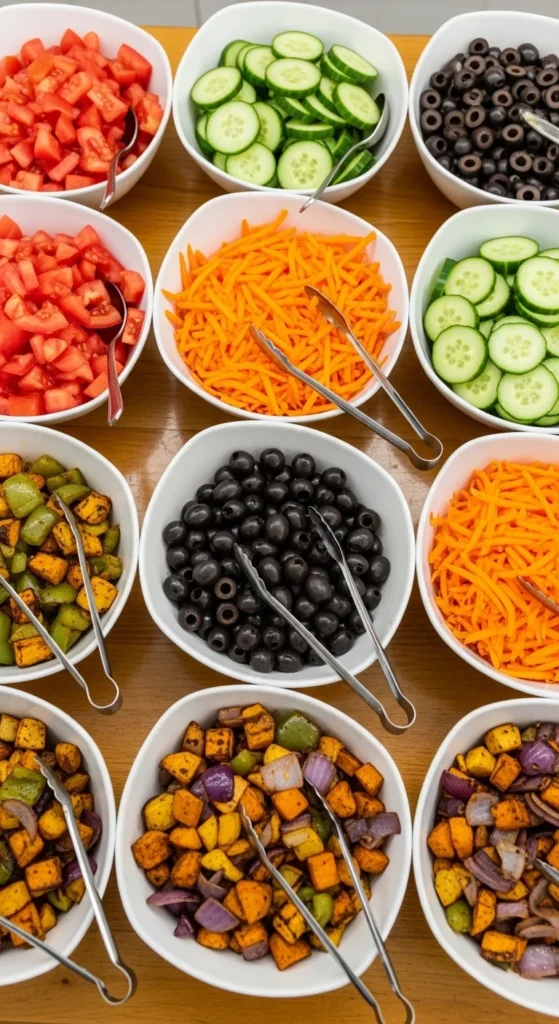
Cut vegetables into bite-sized pieces so guests don’t struggle while assembling their plates.
Don’t Forget Fun Toppings
Toppings transform a simple salad into something exciting. Think of them as the “personality” of your salad bar.
Offer a mix of:
- Crunchy nuts or seeds (almonds, sunflower seeds)
- Croutons or toasted bread cubes
- Cheese options like feta or cheddar
- Dried fruits such as cranberries or raisins
- Pickled onions or jalapeños
- Avocado slices
Place toppings in smaller bowls to encourage guests to sprinkle rather than overload.
Host hack: Label ingredients if possible — guests appreciate knowing what they’re adding.
Serve a Variety of Dressings
Dressings tie everything together. Provide at least three styles so everyone finds a favorite.
Balanced options include:
- Creamy dressing (ranch or yogurt-based)
- Tangy vinaigrette (lemon or balsamic)
- Sweet-savory option (honey mustard or sesame)
Serve dressings in pourable jars or squeeze bottles to avoid spills.
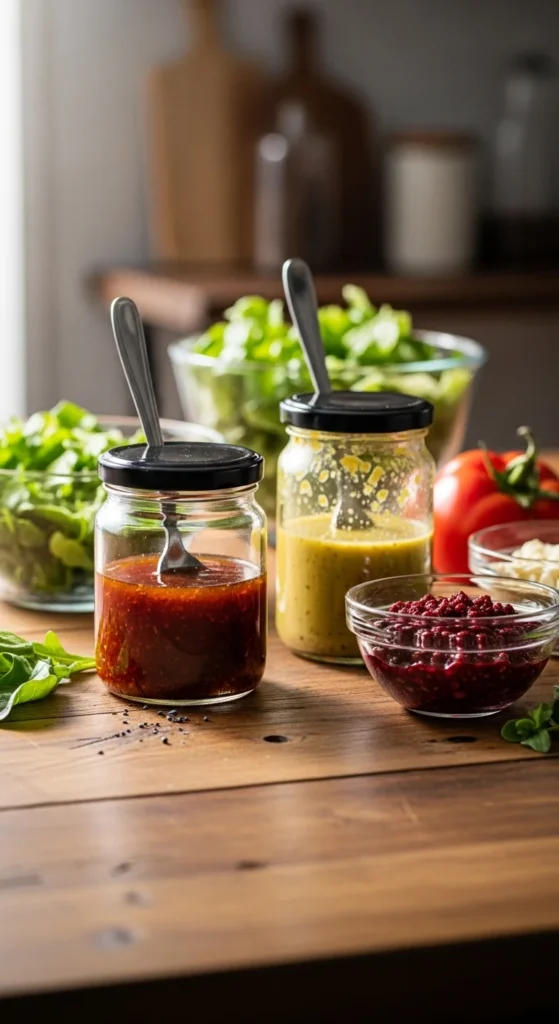
Keep dressings slightly chilled but not too cold, as flavors are stronger at room temperature.
Make It Feel Like a Complete Meal
A common mistake is creating a salad bar that feels like a side dish. To make it satisfying:
- Add warm elements like roasted vegetables or grilled protein
- Include bread, garlic toast, or soup on the side
- Offer flavored water or fresh lemonade for a refreshing pairing
You can even create a small “signature salad suggestion” card for guests who want inspiration.
Presentation Tips That Impress Guests
You don’t need expensive serving ware — thoughtful styling makes the biggest difference.
Try this:
- Use matching bowls or a neutral color palette
- Add greenery or fresh herbs as decoration
- Keep serving spoons in every bowl
- Refill small batches instead of overloading dishes
A clean, abundant look instantly makes food feel more appetizing.
Final Thoughts: Fresh, Easy, and Memorable
A salad bar isn’t just food — it’s an experience. Guests enjoy building their own plates, trying new combinations, and eating exactly what they love. Plus, you spend less time cooking and more time enjoying the gathering.
With fresh ingredients, balanced textures, and thoughtful presentation, your salad bar can feel both healthy and deeply satisfying.
Save this idea for your next gathering — your guests might start requesting it every time!
Leave a Reply