

Ever tried to eat healthier only to get stuck measuring every bite? You’re not alone. Food scales can feel intimidating, time-consuming, and honestly — a little exhausting after a long day. The good news? You don’t need a scale to portion your meals correctly. With a few simple visual tricks and everyday objects, you can build balanced plates that support your goals without turning dinner into a math lesson.
The secret is learning how to see portions instead of weighing them. Once you master this skill, healthy eating becomes faster, more natural, and far more sustainable.
Why Portion Control Matters (Even Without Measuring)
Portion control isn’t about restriction — it’s about balance. Eating the right amount helps you:
- Maintain steady energy levels
- Avoid overeating without feeling deprived
- Support weight loss or maintenance goals
- Build healthier long-term habits
Many people quit dieting because constant weighing feels overwhelming. Visual portioning removes that barrier and makes healthy eating realistic for everyday life.
Think of it as training your eyes instead of relying on tools.
The Hand Method: Your Built-In Portion Guide
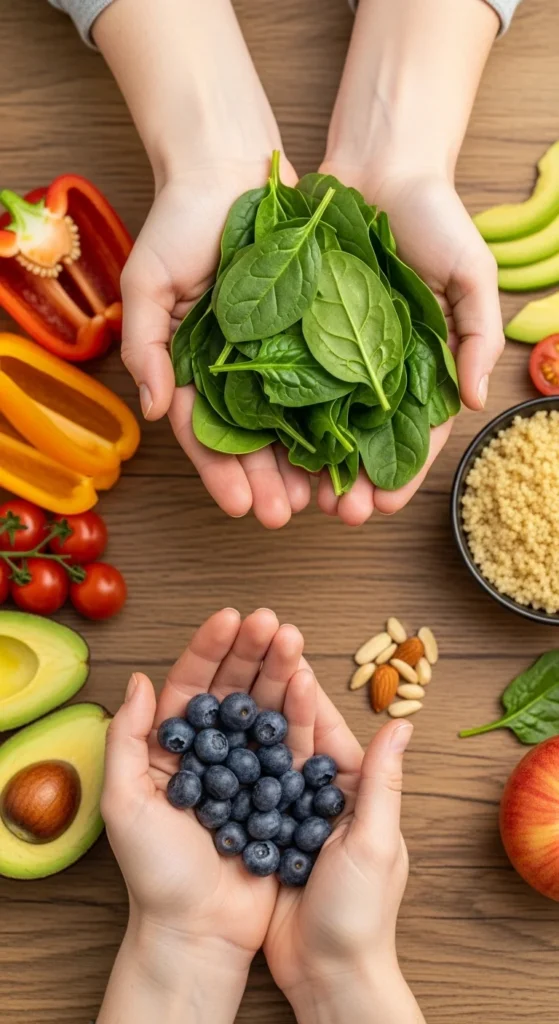
Your hands travel with you everywhere, making them the easiest measuring tool you’ll ever use. Since hand size generally matches body size, this method naturally personalizes portions.
Here’s a simple breakdown:
- Protein (palm size): chicken, fish, eggs, tofu
- Carbohydrates (cupped hand): rice, pasta, potatoes, fruit
- Fats (thumb size): butter, oil, peanut butter, cheese
- Vegetables (two handfuls): leafy greens, broccoli, carrots, peppers
This method works whether you’re cooking at home or eating out.
Example plate:
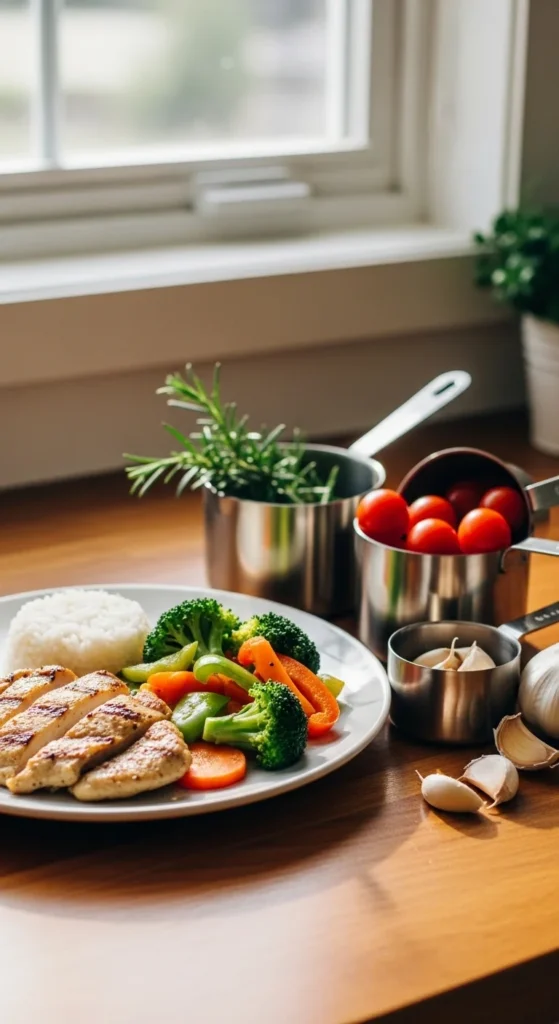
- One palm grilled chicken
- One cupped hand rice
- Two handfuls vegetables
- One thumb olive oil dressing
Use Everyday Objects as Visual References
If you prefer visual comparisons, common household items can help you estimate portions quickly.
Try remembering these easy comparisons:
- Protein portion = deck of cards
- Cooked rice or pasta = tennis ball
- Cheese serving = two dice
- Nut butter = tip of your thumb
- Baked potato = computer mouse
These mental shortcuts are especially helpful when serving food buffet-style or eating at gatherings.
Tip: You don’t need perfect accuracy. Consistency matters more than precision.
Build a Balanced Plate (The Plate Method)
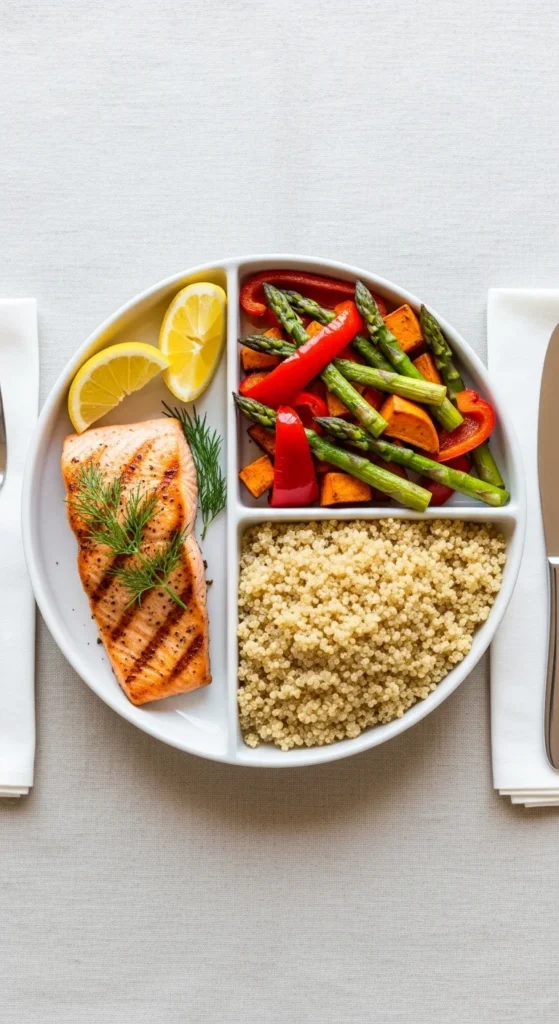
Instead of focusing on individual measurements, look at your plate as a whole. The plate method keeps meals visually balanced and satisfying.
Divide your plate like this:
- Half plate: vegetables or salad
- One quarter: lean protein
- One quarter: carbohydrates
Vegetables add volume without excess calories, helping you feel full while naturally controlling portions of higher-calorie foods.
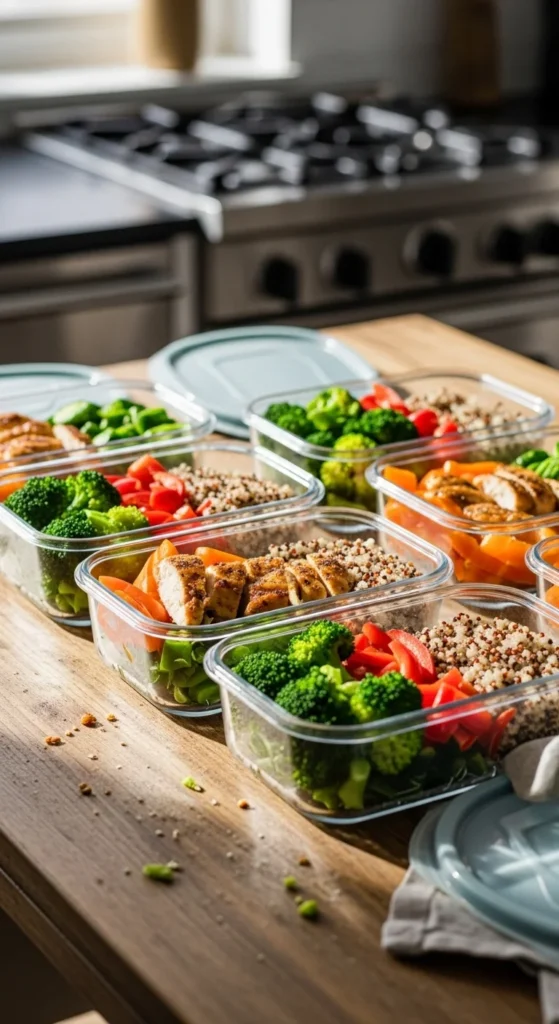
This method works beautifully for lunches, dinners, and even meal prep containers.
Learn Hunger and Fullness Signals
Portioning without scales becomes much easier when you listen to your body.
Before eating, ask:
- Am I truly hungry or just bored?
- When did I last eat?
During meals:
- Pause halfway through.
- Take a sip of water.
- Check how satisfied you feel.
A helpful rule is the 80% full guideline — stop when you feel comfortably satisfied, not stuffed.
Signs you’ve had enough:
- Hunger disappears
- Eating slows naturally
- Food stops tasting as exciting
This awareness turns portion control into a mindful habit instead of a strict rule.
Smart Portioning Tips for Cooking at Home
Small kitchen habits can make a big difference without extra effort.
Try these strategies:
- Use smaller plates or bowls to prevent oversized servings
- Serve food in the kitchen instead of family-style at the table
- Fill your plate once instead of going back for seconds immediately
- Pre-portion snacks into small containers instead of eating from the bag
You can also balance richer meals by simply increasing vegetables rather than reducing everything else.
Eating Out Without a Scale
Restaurants often serve portions much larger than you need — but you can still stay on track.
Easy tricks:
- Share a dish or save half for later
- Start with vegetables or salad first
- Estimate portions using your hand method
- Avoid eating directly from large shared platters
A powerful habit: decide your portion before you start eating. This prevents mindless overeating.
Remember — one larger meal doesn’t ruin progress. Consistency over time matters most.
Make Portion Control Feel Effortless
The goal isn’t perfection; it’s confidence. When you stop depending on scales, healthy eating becomes flexible enough to fit real life.
Over time, you’ll notice:
- You naturally serve balanced meals
- Cravings become easier to manage
- You feel satisfied without overthinking food
Portion awareness is a skill — and like any skill, it improves with practice.
Final Takeaway
You don’t need fancy tools to eat well. Your hands, your plate, and a little awareness are more than enough to guide healthy portions every day. Start simple, stay consistent, and trust your progress.
Save this guide for later and try one portioning method at your next meal — you might be surprised how easy healthy eating can feel!
Leave a Reply